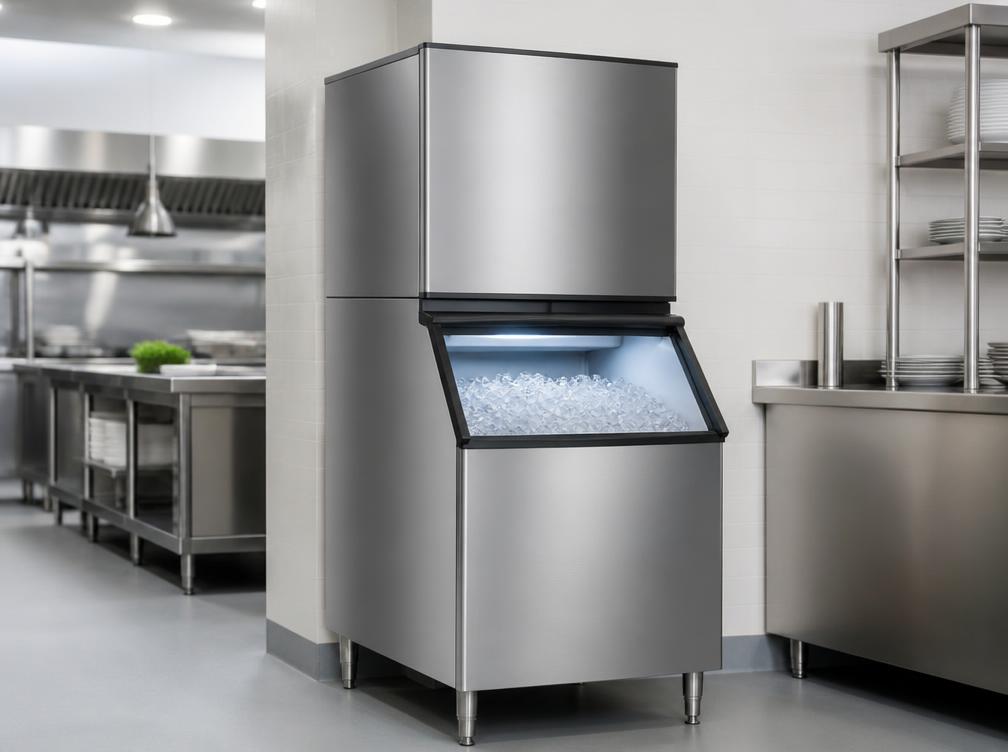
In Houston, ice is not a nice-to-have. Between the heat, outdoor crews, and warehouse floors that run warm most of the year, an undersized or unreliable ice machine gets noticed fast. Three things determine whether yours works out: sizing, placement, and maintenance.
Sizing: start with peak demand, not headcount
The question is not how many people work in the building, it is how much ice gets pulled during the busiest stretch of the day. A crew filling coolers before a morning shift consumes a day's production in an hour.
Also account for storage separately from production. A machine that makes plenty of ice over 24 hours can still run empty at noon if the bin is too small to bank it.
Placement: airflow, water, and drainage
Ice machines need clearance for airflow, a water line, and a drain. Tucking a unit into a tight alcove is the most common cause of poor production and premature wear.
Ambient temperature matters too. A machine in an unconditioned warehouse corner works considerably harder than the same machine in a cooled breakroom, and that shows up in output and service frequency.
Ice type
Different formats suit different uses. Cube ice is the general-purpose default for drinks. Nugget and flake formats chew easily and pack well in coolers, which some crews prefer. Choose based on how the ice is actually used on site.
Maintenance is the whole game
Ice machines fail from neglect far more often than from age. Scale buildup, dirty condensers, and unchanged water filters reduce output first and cause breakdowns later.
- Scheduled cleaning and sanitizing cycles
- Condenser cleaning
- Water filter changes on a set interval
- Visual inspection at each service visit
Where a service program helps
When the ice machine is part of the same recurring visit as coffee and breakroom supplies, cleaning and filter changes happen on schedule instead of when something goes wrong. Our techs check the machine on every visit and log anything that needs attention.