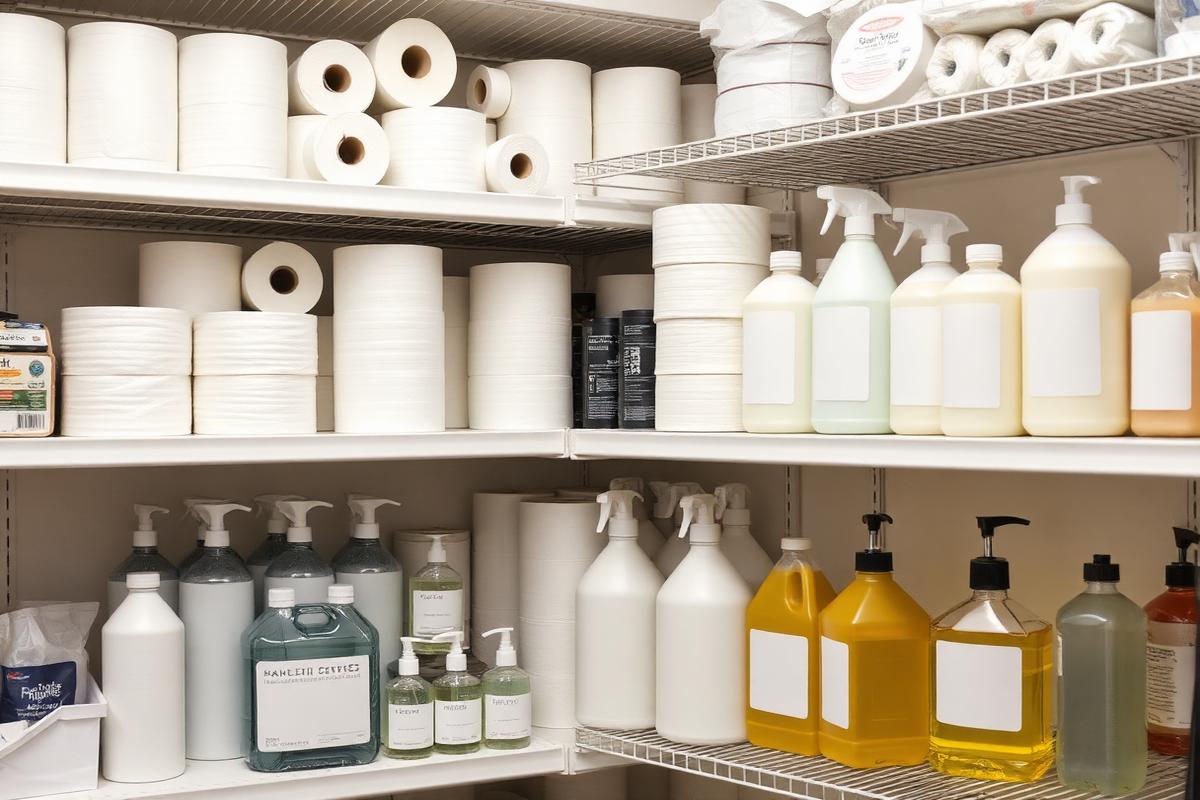
These two get bundled together in conversation and priced very differently in practice. Supplies means the products are delivered and stocked. Service means people come in and do the cleaning. Many offices need one, some need both.
Janitorial supplies
This is a stocking program: restroom paper, hand soap, trash liners, surface cleaners, disinfectants, floor care products, and paper towels delivered and placed on a recurring schedule.
It suits offices that already have a cleaning crew — in-house or contracted — but do not want to manage product ordering, storage closets, and running out of paper towels on a Friday afternoon.
Commercial janitorial service
This is labor. A crew performs a defined scope on a set schedule: vacuuming, desk and surface cleaning, restrooms, kitchen and refrigerator areas, trash removal, and common spaces.
The scope should be written down room by room rather than described as 'general cleaning'. That is what makes quality checkable instead of subjective.
- Vacuum and floor care
- Desk and surface cleaning
- Restroom cleaning and restocking
- Kitchen and refrigerator areas
- Trash and recycling removal
Which one do you need?
If cleaning quality is fine but supply management is chaotic, start with supplies. If the space is inconsistently clean and nobody owns the standard, you need service — and the supplies usually come with it.
Offices with a small footprint and no dedicated facilities staff often take both, because splitting them across two vendors creates the exact gaps they were trying to close.
Combining it with the breakroom program
Breakrooms and restrooms are the two areas people judge a workplace by. Running coffee, breakroom supplies, janitorial supplies, and cleaning through one local provider keeps both on the same schedule with one point of contact.