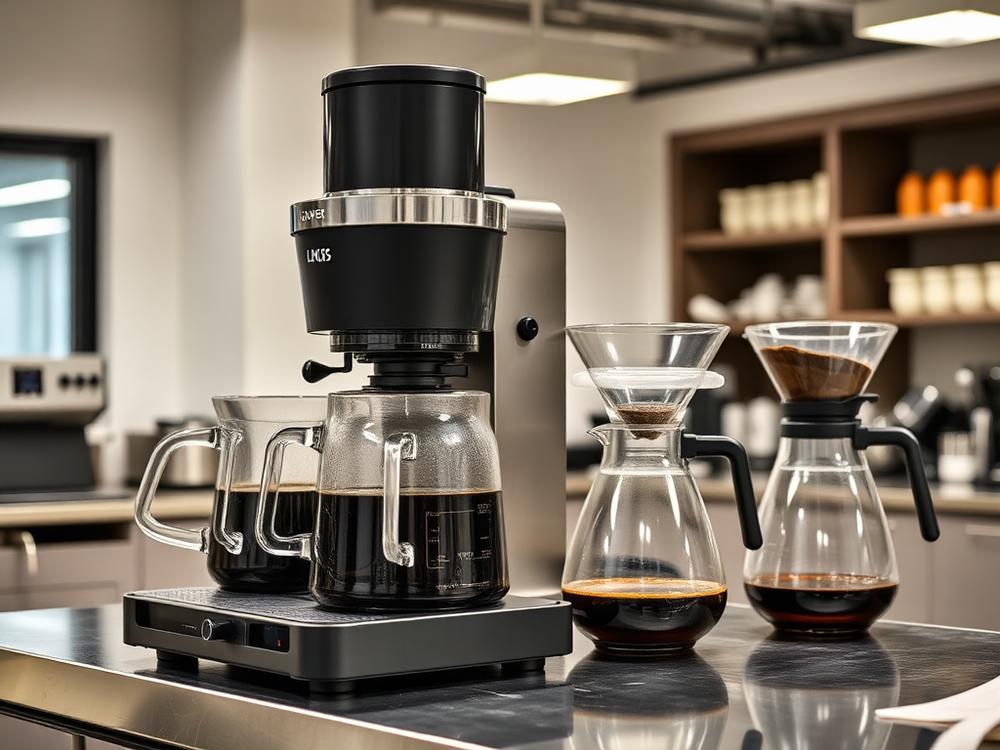
The equipment choice drives everything downstream: what you stock, how much space the breakroom needs, how long the line gets at 8 a.m., and how much cleaning the machine requires. Here is how the three common formats compare for a workplace.
Single-cup (K-Cup) brewers
Each person brews one cup at a time from a sealed pod. Variety is the main advantage — regular, decaf, dark roast, and tea can all live on the same rack, and nobody drinks from a pot that has been sitting for an hour.
Single-cup works best for offices where people drink at different times of day, where taste preferences vary widely, and where waste from half-finished pots has been a problem.
- Best for: small to mid-size offices, professional and front-office environments
- Strengths: variety, freshness per cup, simple operation
- Watch for: pods run out fast during busy weeks, so par levels matter
Bean-to-cup machines
These grind whole beans on demand and brew straight into the cup. Quality is closest to a café, and there is no pod waste, but the machine needs regular cleaning cycles and a supply of whole bean coffee.
Bean-to-cup fits workplaces where coffee quality is part of the culture and where someone will reliably run the cleaning routine — or where a service provider handles that maintenance for you.
Commercial batch brewers
Batch brewers make full pots or urns at once. When 40 people want coffee within the same 20 minutes, nothing else keeps up.
This is the standard for warehouses, manufacturing, construction offices, and any site with shift changes. Cost per cup is the lowest of the three formats, and the supply list is simple: coffee packs and filters.
- Best for: warehouses, plants, shift-based teams, large offices
- Strengths: high volume, lowest cost per cup, minimal moving parts
- Watch for: coffee should be brewed in batches sized to actual demand
How to decide
Start with peak demand rather than total headcount. Twenty people spread across a day is a different problem than twenty people arriving at once.
Then look at the breakroom itself: counter length, water access, and whether the space also has to hold an ice machine, a microwave, and a supply cabinet.
Many Houston workplaces end up with a mix — a batch brewer in the warehouse breakroom and single-cup in the front office. There is no rule that says one building gets one format.