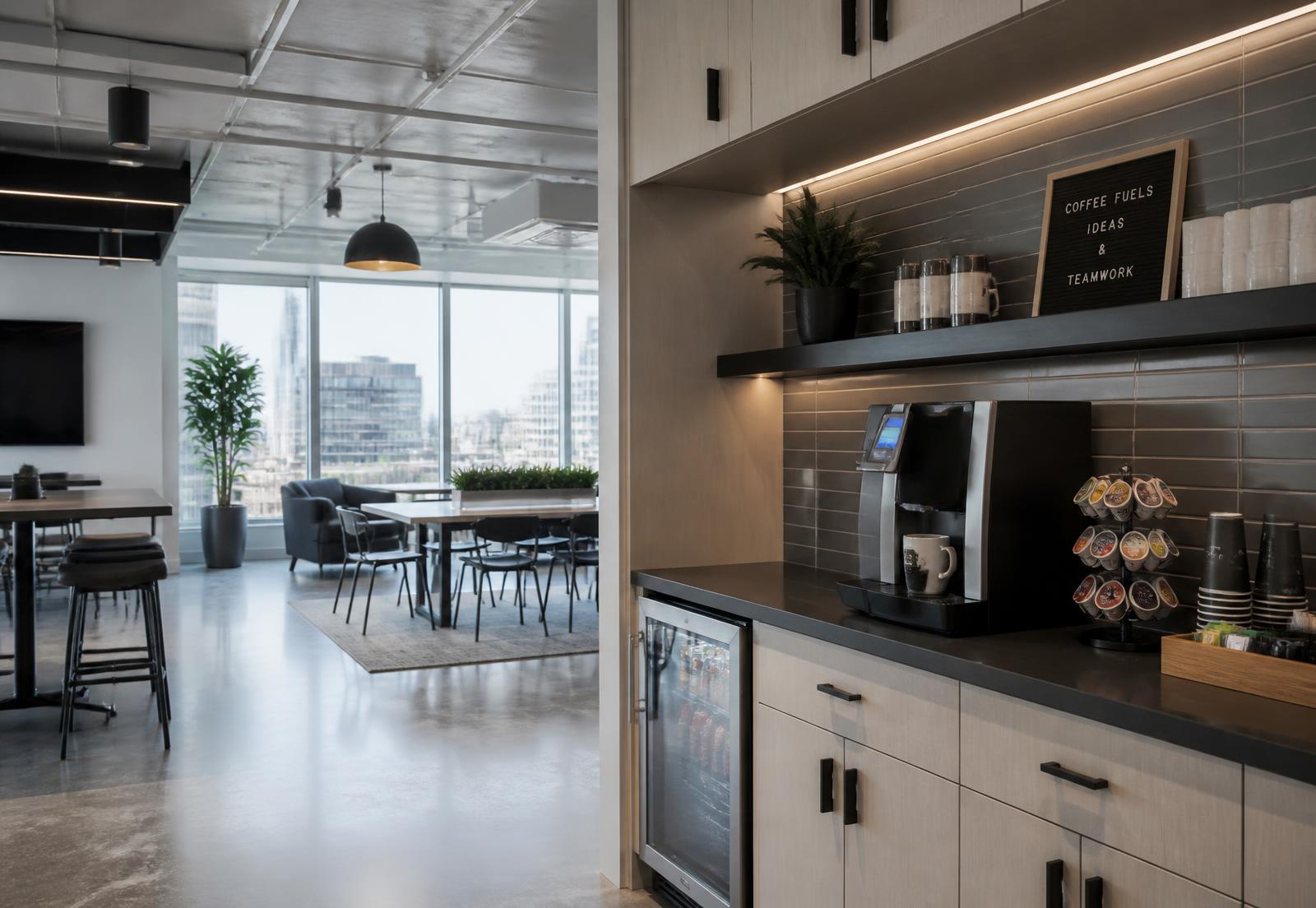
A new space is the cheapest time to get the breakroom right, because the counter, the water line, and the power are still decisions instead of constraints. Work through these steps before the furniture lands.
1. Map the utilities before the layout
Coffee equipment and ice machines need water, drainage, and dedicated power in the right spot. Adding a water line after build-out costs far more than moving a line on a drawing.
Confirm what is available at the intended equipment wall, and leave clearance for airflow behind and above any ice machine.
2. Count peak users, not desks
Size the equipment around the busiest 30 minutes of the day. A team that arrives together needs batch brewing capacity even if the headcount is modest.
If the space serves multiple departments or shifts, note how they overlap.
3. Decide how many breakrooms the space really needs
In many Houston buildings, one central breakroom plus a smaller front-office station works better than a single large one. Distance is what determines whether people use a space or keep a coffee maker at their desk.
4. Plan storage, not just the counter
Every stocking program needs somewhere to keep the backstock. A dedicated cabinet or supply closet keeps the counter clear and makes counting quantities possible.
5. Build the initial product list
Open with a focused list — coffee, tea, creamers, sweeteners, cups, and disposables — then expand based on what actually gets used in the first month or two.
6. Set the service schedule from day one
Establish the recurring visit before habits form. Equipment gets cleaned, supplies get counted and refilled to par, and the office manager never becomes the coffee buyer.